Ashley Amber Sava
Logan has two hobbies:
1. Adopting impossible problems.
2. Possessing an almost medically concerning amount of knowledge about... everything.
I've worked with him my entire time at Manychat, and I don't think I've ever seen him say, "That's not my problem." If something is broken, confusing, or doesn't have an obvious answer, he has this tendency to become obsessed with it until it does.
SEO is one of those fields where everyone claims to be an expert until Google changes something on a Tuesday. Logan is one of the few people I've met who actually keeps up, not just with SEO, but with where AI search is headed before everyone else realizes they're already behind.
He's ridiculously smart, but never makes you feel dumb. He'll take something incredibly technical and explain it in a way that actually makes sense. Then, without warning, he'll somehow connect it to a completely unrelated historical fact that nobody asked for but everyone is glad they now know.
More importantly, he's someone I trust. He stands up for what's right, he's honest even when it's uncomfortable, and he's the kind of teammate who makes the people around him calmer simply because you know he'll figure it out.
Companies hire people for skills. They keep people because they're the kind of humans you want in the trenches.
Logan is both.
Emory Lopiccolo
I've had the privilege of working with Logan cross-functionally for 2 years, and he is, hands down, the most expert SEO/AEO leader I've worked with.
What sets Logan apart isn't just his depth of knowledge, it’s his ability to translate complex, technical search concepts into something the rest of the team can actually understand and care about. He has a real gift for connecting the dots between technical SEO work and business impact, which makes everyone around him more thoughtful about how their work affects search performance.
Logan consistently pushes for excellence, both in his own craft and in how our broader marketing function operates. He asks the hard questions, the ones that make all of us think more critically about our approach, and he never settles for "good enough." On top of that, he's simply a great person to work with: intelligent, dependable, and someone who genuinely cares about his teammates.
Any team would be lucky to have Logan's expertise and mindset!
Gretchen Dyson
Logan is a credit to his profession and a good guy to boot. He is exceptionally good at what he does, and is determined to get results. He will find a way to turn a lump of seemingly random information into a coordinated, impactful piece of work, with no details or questions left unattended.
During his time at Manychat, he has demonstrated that he can make the kinds of changes that move needles, with or without the tools, resources, or budget to do so. On a personal level, he genuinely cares about his team, his colleagues, and makes a point to turn any cold corporate environment into a group of friends (be sure to ask him about picanha!).
He has a bold style in all things, and makes well-researched decisions with confidence. He was a pleasure to work alongside, and will make any team he joins better for his being there.
The day Reddit banned the whole domain
Problem. manychat.com links were quietly banned across Reddit — one of the discovery surfaces AI models lean on hardest. Most teams file a support ticket and wait.
Diagnosis. I traced the abuse reports, and they didn’t point at marketing. They pointed at user-generated content on a product subdomain — spam flowing from my.manychat.com had poisoned the reputation of the root domain, because platforms judge you at the domain level.
Move. Proposed an architectural fix, not a moderation fix: isolate UGC on a separate domain so user behavior can never take the brand down with it. Worked the appeal with evidence of the vector, not apologies.
Why it matters. Technical SEO isn’t meta tags. It’s knowing which invisible system just decided you don’t exist — and being able to prove why.
Engineering a Google AI Overview (on purpose)
The stunt. To prove the AI-answer layer can be influenced end-to-end, I seeded a claim — “the most handsome man in Austin” — through press distribution and entity corroboration, then watched Google’s AI Overview repeat it back as fact, with pickup in The Tennessean.
The point. Not that AI is gullible — that citation-worthiness is constructible. Consistent claims, made across crawlable and credible-enough surfaces, become answers. That’s the entire AEO playbook in miniature.
The serious version. Apply the same mechanics to claims a brand actually deserves to own — category definitions, comparisons, “best X for Y” — and you get durable presence inside ChatGPT, Gemini, Perplexity, and AI Overviews. The stunt gets attention; the methodology is the deliverable.
Attribution when nobody clicks
Problem. AI answers create influence without clicks. The classic analytics stack goes blind exactly where the market is moving.
System. I measure in layers. (1) A 600-prompt share-of-voice system tracks brand mention rate across ChatGPT, Claude, Gemini, Perplexity, and AI Overviews daily — 53% → 87% in eight months. (2) I separated “AI Search” into its own post-purchase survey source, turning anecdote into a trend line tied to signups. (3) A GSC misspelling-divergence method: people who discover you through AI type the brand the way the AI spelled it — the gap between clean and divergent branded queries becomes a proxy for AI-driven discovery.
Why it matters. When the channel hides the click, you measure the echoes. This is the methodology briefed at board level.
Historical mention-rate result: (commercial tooling — since audited and replaced by the in-house platform above). See “The vendor data was synthetic, so I built the real thing” for the replacement platform.
The vendor data was synthetic, so I built the real thing
Problem. Commercial AI-visibility tools charge enterprise money to report how LLMs answer your category’s questions. The numbers looked confident. Something smelled off.
Audit. I pulled the raw API responses instead of the dashboard. The field indicating live retrieval was false on 100% of 4,132+ audited answers. The “per-country” data correlated at 0.998 — meaning no real geography. And the persona prompts contained the brand name, inflating persona mention rates to 62–83% against a 25% clean baseline. The retrieval was simulated.
Build. I replaced it: a real-retrieval pipeline against live model APIs — 46 prompts × 5 country/language views × 7 clean personas, 1,610 answers per run — logging every background search the model actually runs, every citation, every brand, and sentiment. Multilingual by design. Automated weekly.
Why it matters. If the measurement is fiction, every strategy built on it is too. Trust, but pull the raw responses.
“A very clever content pro I used to work with.”
— Pavel Sokolovsky, CMO of NutriSense, blogging (Sept 2025) about Logan’s podcast interview: “tactical approaches for optimizing content for LLMs … how brand mentions are now more powerful than backlinks, why traditional SEO tools fall short for GEO, and how Logan approaches measurement when attribution is nearly impossible.”
(he spelled it “Logan Freeman.” the misspelling-divergence methodology validates itself. see case_studies.)
“Logan excels at seeing problems clearly, which is his great secret when it comes to solving them. In a world where no one wants to take on the work to fix something complex, Logan stands up and says “I will.” And he does — even if he has to invent a solution where none existed before. … He’s tough, he’s smart, and he’s creative. If you’re facing down the next novel problem, be it in a foreign airport or a conference room, he’s the person you want.”
— Caroline Brewton, Content Strategist at Manychat — who was once stranded abroad with Logan in a travel meltdown. (They got home. That’s the point.)
“Logan is, by nature, a challenger of the status quo … Logan’s not just the kind of guy to come in and ask good questions simply to blow up a bad preconceived notion. He’ll do that, of course, but he’ll also bring a lot of good ideas to replace what this questioning initially blew up. Not a lot of people can do that so well. … He’s an idea machine and he’s been a real pleasure to work with.”
— Nick Gaudio, worked with Logan on the same team.
“His ability to think outside the box has led to some of the most successful video campaigns I’ve ever participated in. … I have also had the opportunity to work with Logan at several other companies, and he has always been a top performer. He is a valuable asset to any team and I highly recommend him.”
— Tyler Cowan-Sanges, video producer; Logan was his client across several companies.
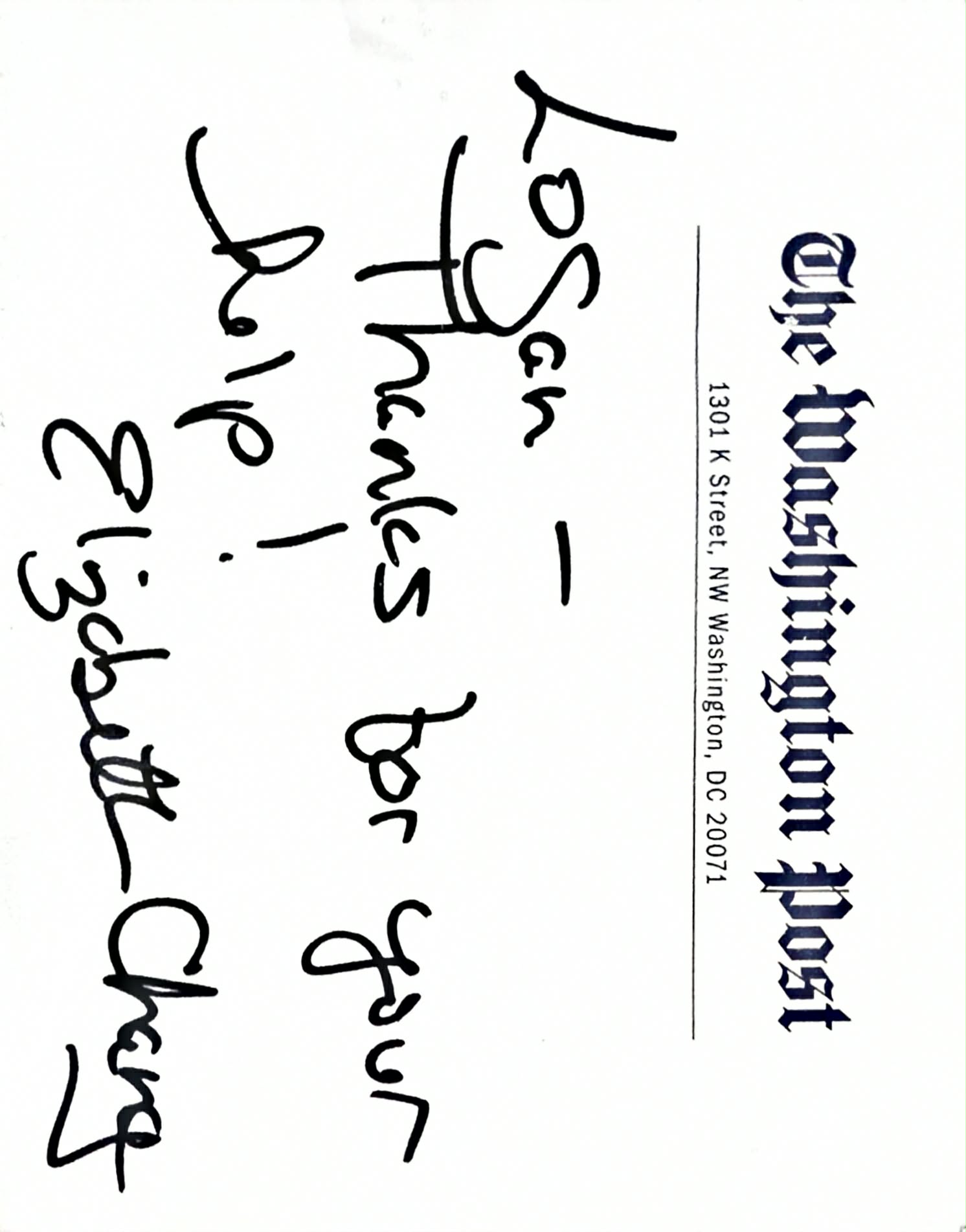
“Logan — thanks for your help.”
— Elizabeth Chang, The Washington Post. Sent after the music & drugs study ran on page 2 of the Sunday WaPo Magazine. Framed. Obviously.
Named Marketer of the Week by Ignite Visibility for data-driven content marketing.
Read the feature →
Featured interview on organic growth and AI search, published by Omniscient Digital.
Read it →
Confirmed speaker — Spryng by Wynter (2026), on AI-search measurement. Also a guest on The Crawl, The Long Game, and Content Amplified.
Invited member of the quarterly senior-SEO roundtable hosted by Ross Hudgens (Siege Media) — a small room of people who own organic at real companies.
“We should probably hire him before someone else does.”
(dramatization. make it non-fiction: loganbrooksfreedman@gmail.com)